Saturday, February 12, 2011

"I have loved none but you." Romantic Love Letters in History.


"I can listen no longer in silence. I must speak to you by such means as are within my reach. You pierce my soul. I am half agony, half hope. Tell me not that I am too late, that such precious feelings are gone for ever. I offer myself to you again with a heart even more your own than when you almost broke it, eight years and a half ago. Dare not say that man forgets sooner than woman, that his love has an earlier death. I have loved none but you. Unjust I may have been, weak and resentful I have been, but never inconstant. You alone have brought me to Bath. For you alone, I think and plan. Have you not seen this? Can you fail to have understood my wishes? I had not waited even these ten days, could I have read your feelings, as I think you must have penetrated mine. I can hardly write. I am every instant hearing something which overpowers me. You sink your voice, but I can distinguish the tones of that voice when they would be lost on others. Too good, too excellent creature! You do us justice, indeed. You do believe that there is true attachment and constancy among men. Believe it to be most fervent, most undeviating, in


F. W.


Friday, February 11, 2011

"..should I draw you the picture of my heart..." Romantic Love Letters in History

In honor of Valentine's Day I will be posting excerpts of love letters throughout history for the next couple of days. Letters will be from both real and fictional people. Jane Austen wrote some of the most romantic novels, with some very romantic love letters that I thought that it might be fun to look at other romantic love letters. Let the romance begin!


My Dearest Friend,


...should I draw you the picture of my heart it would be what I hope you would still love though it contained nothing new. The early possession you obtained there, and the absolute power you have obtained over it, leaves not the smallest space unoccupied.


I look back to the early days of our acquaintance and friendship as to the days of love and innocence, and, with an indescribable pleasure, I have seen near a score of years roll over our heads with an affection heightened and improved by time, nor have the dreary years of absence in the smallest degree effaced from my mind the image of the dear untitled man to whom I gave my heart.


23 Dec 1782 Love letter from Abigail Adams to her husband John Adams.

If one reads other letters between Abigail and John one will notice that they use pen names. It was custom back them. Abigail used Diana, the Roman goddess of the moon and later in life she used Portia. However, Abigail always began her letters to her husband with My Dearest Friend. John used the pen name Lysander, a Spartan war hero.


The love between Abigail and John is still talked about today in the United State as one of the greatest American love stories.


Do you think this romantic? Do you have a favorite love letter?


Tuesday, February 8, 2011

Jane Austen Twitter Project

I am participating in the Jane Austen Twitter Project which officially kicked off today. Follow the hashtag #A4T. We will tweet every Tuesday until May 3rd.

It is still not too late to sign up for the Jane Austen Twitter Project.

Remember, one can never have too much Jane Austen.

Tuesday, February 1, 2011

18th Century Attitudes Toward PTSD

Those of you following my story, Saving Grace, already know that our dear, Colonel Richard Fitzwilliam, has returned from the Napoleonic Wars with what we now call Post Traumatic Stress Disorder (PTSD), but back in Regency England they would not have had the name or medical understanding that we have today. It was not until World War I that we termed the condition ‘shell shock.’


Research on the condition of PTSD in the 18th century has meant significant digging and well piecing together bits and pieces of information. Let’s say my research is ongoing. However, I can share with you background information on the Colonel’s condition.

PTSD comes in different forms and Colonel Fitzwilliam experiences a combination of different types of PTSD. The main type of PTSD he experiences is called re-experiencing. He relives his experiences through recollections, dreams or acting as if the event is still going on. In one scene in my story a sound in a loud, crowded ballroom triggers a re-experience of events for Colonel Fitzwilliam.

PTSD is not limited to just re-experiencing though. There are many pieces to the puzzle. There are the attempts to numb or avoid the topic of what he experiences. Colonel Fitzwilliam does this with copious amounts of alcohol. There could be outbursts or anger or they may have difficulty in social situations. There are many aspects of PTSD and a whole paper could be written on them.

The 19th Century Victorians called the condition Railway Spine. This was a result of the appearance of the railroads and in turn railroad accidents. The symptoms of railway spine were associated with “hysterical” physical symptoms where individuals complained of bodily complaints, but who had not actual bodily injuries. I have yet to find evidence to support this theory, but it is conceivable that if you exhibited these symptoms you may land yourself in the mental ward, which back then would probably have been more terrifying than the actual PTSD.

However, we are in the 18th century. The Napoleonic Wars were long and drawn out and it is not inconceivable that soldiers did not return with PTSD. They just would have had a different name for it. In regards to the Royal Navy they were believed to just be melancholy. War and its consequences (death, disease etc) were so commonplace during the 18th century that those who had symptoms of PTSD were called cowards. The name’s they had for PTSD were ‘cerebro-spinal shock’ or ‘wind contusions’. The condition was treated with skepticism which had to be difficult for a soldier who had no physical wounds.

That is a brief background of 18th century attitudes to the condition of PTSD. It is also a very brief explanation of how PTSD affects Colonel Fitzwilliam. I do not claim to be an expert, but wanted to provide my readers some background to understand Colonel Fitzwilliam. I try to treat the Colonel’s PTSD with the utmost sensitivity as even today there is a stigma attached to soldiers who have PTSD. It is not a fun experience I would image, but very real.

Well, I am off to work more on Saving Grace. :) Colonel Fitzwilliam has been very difficult lately in regards to achieving happiness. Sigh, these men in uniform are so domineering.

Austen Inspired Book Releases today:
 

Monday, January 31, 2011

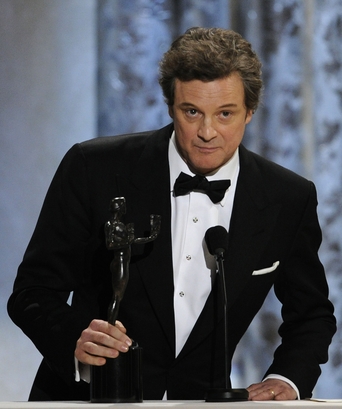
Colin Firth Grabs 2nd Best Actor Award


So Dashing!

The ever wonderful Colin Firth landed a second Best Actor Award at last night’s Screen Actors Guild Awards for his portrayal of King George VI in The King's Speech.


Congratulations for a job well done!
                                                                                                 

Sunday, January 30, 2011

The King's Speech


I saw The King’s Speech with members of my local JASNA group and I have always been a fan of Colin Firth, but I could not say enough about the little film that could. Colin Firth, quite simply, is extraordinary to watch. In fact, you feel like you are a voyeur intruding on personal moments. There were times I felt uncomfortable watching King George VI struggle because A) Colin Firth is that good and B) they were such relatable moments that one cannot help but identify with his situation. Simply put this film is breathtaking. I recommend that if you have not already seen this film that you should. It is not to be missed.

The little film that could has achieved the following:

Best Actor Winner- Colin Firth at Golden Globes


Best Picture Producer’s Guild of America Award


12 Academy Award Nominations: Best Picture, Best Actor, Best Supporting Actor, Best Supporting Actress, Best Director


14 BAFTA Award Nominations: Best Film, Best Actor, Best Supporting Actor, Best Supporting Actress, Best Director


4 Screen Actor Guild Awards: Best Ensemble Cast, Best Actor, Best Supporting Actor, Best Supporting Actress


Did I mention the Jane Austen reunion which takes place in this film? Colin Firth, our amazing Mr. Darcy from Pride and Prejudice (1995), Jennifer Ehle (Lizzy Bennet) and David Bamber (Mr. Collins). That made me squeal as well. How lovely.

Any Harry Potter fans out there (stupid question), Timothy Spall plays the role of Winston Churchill, but you may remember him as Wormtail in Harry Potter and the Half-Blood Prince.

In addition, Helena Bonham Carter who plays Queen Elizabeth is Bellatrix Black in the Harry Potter films.

If there are not enough good reasons to go see The King’s Speech then go see the film because it is simply amazing.

Saturday, January 29, 2011

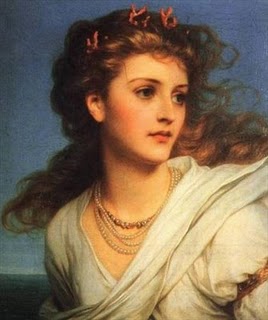
How do you picture Lady Grace MacKenna?

I have my image of what Lady Grace looks like. From the pictures below which of those fits your image of Lady Grace?