Showing posts with label jane austen. Show all posts

Saturday, January 30, 2016

Music and Inspiration


Short blog post today as I am hard at work on the edits to overhaul the story of Colonel Fitzwilliam and Lady Grace into an amazing story which I hope to publish this year or early 2017.

Music is a huge part of my writing process. It helps me get to the emotion of particularly hard scenes by setting the tone. My writing process is unique or maybe not so unique. I have to have music to write. It helps my process. I think it makes me a better writer.

As I work on my Austenesque novel about Colonel Fitzwilliam there have been two songs which I have deemed the theme songs of my novel. I tried to pick only one, but both of these songs just spoke to me and they really encompass the tone of the relationship between Colonel Fitzwilliam and Lady Grace.  It’s sexy and playful, but with a touch of darkness and mystery.

Please take a moment to listen to the theme songs for the romance of Colonel Fitzwilliam and Lady Grace.

Tip of my Tongue by The Civil Wars


Dance Me to the End of Love by The Civil Wars


You can check out additional musical inspiration for my novel by checking out my playlist. Click on the tab titled playlist at the top. J

Saturday, December 13, 2014

A REVIEW: Jane Austen's First Love by Syrie James


 Thank you to Laurel Ann Nattress (of Austenprose) for allowing me to be apart of the blog tour and giving me the opportunity to read this wonderful book and thank you to Syrie James for writing it.
Genre: Austenesque/Historical Fiction/Romance/Young Adult
Publisher: Berkley (Penguin Group USA)
Trade paperback ISBN: 978-0425271353
eBook ISBN: 978-0698139268
 
I became a fan of Syrie James after reading Nocturne, so when I was asked if I might consider reviewing her latest work, I could not resist the temptation. I find that I was not disappointed in the beautiful tale that James has so masterfully woven.

Jane Austen is a precocious fifteen year old who dreams of doing something useful, writing something of importance and falling in love. When her older brother Edward (who was adopted and raised by wealthier cousins) announces his engagement Jane get’s her chance. Jane, her sister Cassandra, their brother Charles and Mother travel to Kent to celebrate. While there Jane meets the worldly Edward Taylor and she falls in love with him. It makes for a fascinating tale.

What I found exciting as I read was the connection to the novels Austen herself wrote. A play is to be produced at home after poor weather cancels some of their previously planned events which is reminiscent of Mansfield Park. Matchmaking attempts gone awry such as in Emma, Sisterly bonds as in Sense and Sensibility and Pride and Prejudice,  rapier wit as evident in Pride and Prejudice, and an active imagination as in Northanger Abbey.

In the book, Jane herself has the traits of heroines in her own novels. Jane tried to be a matchmaker and just as Emma discovered, it does not always have the results you were hoping for and the human heart is better left to discovering its own wants and desires. Her wit and impertinent remarks reminded me of Elizabeth Bennent in Pride and Prejudice. Jane is a bit like Marianne Dashwood in Sense and Sensibility in that she meets a dashing stranger who she falls madly in love with. We also know that in real life Jane and her sister Cassandra had such a strong bond and it is portrayed beautifully on the pages. There bond reminded me of Jane and Elizabeth in Pride and Prejudice and of Elinor and Marianne in Sense and Sensibility.

We all know Austen’s works and they always say to write about what you know, so I cannot help but think that each of Austen’s heroines had a little bit of herself in them. Or that her novels did not have some of her own experiences in them. I wouldn’t have expected less form James in this regard, for I feel that when she writes something about Austen she makes sure to do her justice.

Jane Austen’s First Love is a captivating read. Any Austen fan would like to think that Jane herself had been in love at least once even though she never married and this book fulfills our greatest wish as fans---to see Austen in love. James has done her research for the novel and really brings the characters to life. Edward Taylor was a real person and just the sort of man Jane would have been drawn to.

James has constructed a beautiful love story. A fitting interlude that while it brings pangs of regret for its ending can only be looked back upon with fond remembrance. As Elizabeth Bennett said in Pride and Prejudice, “Think only of the past as its remembrance gives you pleasure.” This novel has given me pleasure, indeed.
 
Get this wonderful book in time for Christmas. Order by December 15th.

 
AUTHOR BIO:

 Syrie James, hailed as “the queen of nineteenth century re-imaginings” by Los Angeles Magazine, is the bestselling author of nine critically acclaimed novels that have been translated into 18 languages. Her books have been awarded the Audio Book Association Audie, designated as Editor’s Picks by Library Journal, named a Discover Great New Writer’s Selection by Barnes and Noble, a Great Group Read by the Women’s National Book Association, and Best Book of the Year by The Romance Reviews and Suspense Magazine. Syrie is a member of the WGA and lives in Los Angeles. Please visit her at syriejames.com, Facebook or say hello on Twitter @SyrieJames.


Grand Giveaway Contest
Win One of Five Fabulous Jane Austen-inspired Prize Packages


To celebrate the holidays and the release of Jane Austen's First Love, Syrie is giving away five prize packages filled with an amazing selection of Jane Austen-inspired gifts and books!

To enter the giveaway contest, simply leave a comment on any of the blog stops on the
Jane Austen's First Love Holiday Blog Tour.

Increase your chances of winning by visiting multiple stops along the tour! Syrie's unique guest posts will be featured on a variety of subjects, along with fun interviews, spotlights, excerpts, and reviews of the novel. Contest closes at 11:59pm PT, December 21, 2014. Five lucky winners will be drawn at random from all of the comments on the tour, and announced on Syrie’s website on December 22, 2014. The giveaway contest is open to everyone, including international residents. Good luck to all!


Monday, September 29, 2014

REVIEW: A MODERN DAY SENSE AND SENSIBILITY BY KAITLIN SAUNDERS


It’s sometimes hard to imagine a Jane Austen story today given the change in social dynamics. Sense and Sensibility could perhaps be on the harder Austen books to modernize, next to Mansfield Park and Northanger Abby perhaps.  Older men who marry significantly younger women may have been necessity in Austen’s time, but it is not such a socially accepted norm today. Marrying a person you don’t love is kind of an archaic thought now, but I guess if you had Donald Trump assets and wanted your child to marry into even more money that it could happen this day in age. While we can all relate to the theme of money and the reality of having to downsize to a lifestyle that is within our means, it is harder to imagine that one’s own family could be cruel enough to deprive them based on a mere technicality of not having drafted an updated will. But then is it really so hard to imagine? People are just as unwilling to confront the possibility of their own death now as they were back then.

In Kaitlin Saunders modern adaption of Sense and Sensibility, Mr. Dashwood did not leave a will which would have provided for his second wife Diane and their children, Elinor (Ellie for short), Marianne or Margaret.  That lack of foresight to provide for his family will cost them dearly. While he may have been the CEO of a successful company and able to provide for his second family and his son, John Dashwood, from his previous marriage, his lack of planning meant only John would inherit. While John was willing to provide for his step-mother and half-sisters, his money hungry wife Francil is not so desirous in sharing their newfound wealth. Using her female attributes she persuades John that his father’s dying words on his death bed only implied that he should give his step-mother and half-sisters a small lump sum payment of money and the rest was to be for them and their son Harry. I never much cared for John’s wife in Austen’s original novel, but Miss Saunders has really made me detest her.

Diane Dashwood’s pain at the unexpected death of Mr. Dashwood leapt of the pages. I found my heart strings pulled and my emotions well up at what can only be unimaginable pain and then to find out that your husband had never revised his will has to be truly devastating. The unfeeling nature of Francil increases the emotional turmoil of a reader. Diane and her daughters not only have to deal with the stages of grief at the unexpected death of Mr. Dashwood, but they have to contend with being forced out of the only home they have ever known. In all of Francil’s greediness and making them feel like guests in their own home, I almost expected Francil to demand to look through the boxes they had packed so she could  make sure that they were not taking anything that she deemed hers. She didn’t go that far, but she was navigating that way.

When Diane, Ellie, Marianne and Margaret are finally able to leave it almost comes as a relief to the reader. The relief is overshadowed by how much their life has changed. Arriving at their new home in Oregon is perhaps the most depressing realization that they are not in Kansas anymore. They have gone from a beautiful arced estate to a tiny apartment. Yet with surprising resilience they come to accept and love their new home.

One of the many challenges of this adaption would be the romance of Marianne and Brandon. These days it’s a lot harder to justify an older man marrying a significantly younger woman.  Miss Saunders handles this situation perfectly by not really focusing on the age difference.  It is almost as if by not acknowledging it that it develops into something unimportant when the age difference is brought up. This is no easy feat as today’s readers have an entirely different idea of social acceptability than what was acceptable back in Austen’s time.

The dislike Brandon has of Willoughby remains in a slightly updated version of the story. Yet, with Willoughby we retain a certain sympathy for his plight when he gets the chance to explain himself to Ellie when Marianne is ill. In Austen’s original I cannot say one ever feels remotely connected enough to Willoughby to give him the chance of sympathy. Although, in Saunders version of the Marianne/Willoughby romance one feels a sense of distrust for a stranger who shows up out of nowhere to conveniently rescue the injured Marianne, which I do not feel we were fully privy to in Austen’s original. It’s as if updating the story makes you more aware of a stranger who is so charming from the start, although being a modern retelling I feel as if we are able to get justification for Willoughby’s actions more readily. Saunders handling of this was perfect to the point that the satisfaction of Marianne and Brandon finally coming together was even greater than anticipated.

Ellie and Edward are always my favorite couple of the story. I have just always identified with Elinor more so than Marianne only because I see myself in Elinor. In this adaption, Edward is a freelance photographer and Ellie is an accountant. I think the way Saunders tells the tale of Ellie and Edward’s romance does significant justice to them. As readers of the original, we have always known Elinor to be the reserved one, but it’s so poignant in the way Saunders writes Elinor that her reserved nature practically jumps off the page to the point that you want to be able to reach through the pages and shake her. In addition, you can feel the absolute fatigue that Ellie feels at having to be the emotional pillar for not only Marianne, but her mother too. I don’t think I ever really felt that way when reading Austen’s original. I felt the love and need to support one another, but I never had the sense that Elinor was tired or frustrated in being that emotional pillar for her sister and mother.

This adaption is a great modern retelling of Austen’s Sense and Sensibility. The elements of Austen’s work remain the same, but Saunders is able to seamlessly modernize the story. It makes for an exciting read. I was most curious to how she would create the scene when Marianne spots Willoughby with the mysterious Miss Grey and I was not disappointed. Behind the backdrop of a modern company party Marianne’s world comes crashing down. I felt pain and sympathy at the final undoing of Marianne’s heartbreak and I can’t say I have always sympathized with Marianne.

Miss Saunders is able to achieve something that not all authors can. She achieves the desire of making readers want to read more. This is what keeps readers coming back time and time again. She is able to create stories where the reader feels as if she is right there with the characters. I felt this to be a delightful adaptation of Sense and Sensibility. I cannot wait to read more from Kaitlin Saunders. I am hoping her next modern adaptation may involve Northanger Abbey.


Sunday, February 3, 2013

Traversing the English Countryside with Jane


I’ve often desired to hop across the pond to England just to go into the English countryside and visit the places which Austen speaks of in her novels and places where Jane herself lived. I have loved many authors, but none so much as our dear Jane.
Chawton House

Who is to say what it is about her that speaks to us. Her novels are like old friends that bring us comfort or happiness when we need it most. They are timeless treasures which each of us holds onto. This enchantment is what spurs our desire to see the places Jane lived and those she spoke about in her novels.

Pride and Prejudice is 200 years old! Who knew age could look so good, but it does.  Take a tour through Jane Austen’s English Countryside with Smithsonian Magazine. Read the article by Nina Fedrizzi here.


I hope you enjoy your journey.

Sunday, November 6, 2011

A Modern Day Persuasion by Kaitlin Saunders: A Review

A Modern Day Persuasion

By: Kaitlin Saunders

ISBN-10: 1439261172

Source: Author supplied copy

Persuasion is one of those novels that are timeless. A tale of second chances for the love of a lifetime, which has the power to completely disarm you and something you never recover from. Persuasion is one of Jane Austen’s most emotional novels for this very reason.


It was with great delight that I read Kaitlin Saunders modern take on Persuasion. A Modern Day Persuasion packs an emotional wallop and there were moments where I found myself tearing up, having a lot to do with Miss Saunders impeccable writing.

Anne is a greeting card designer, which given her emotional and compassionate heart is a great career. I always knew that her family walked all over her, but in the modern adaptation it was much more apparent. I found myself gritting my teeth about how uncompassionate her sisters, and even her father, were. Anne has always been the adult of the family and the weariness, coupled with her heartbreak, shows how vulnerable she really is.

Mary, Elizabeth and Mr. Elliot all have the characteristics of their original counterparts, but they are more developed. Mr. Elliot comes across as a bit softer, yet he still is careless in his concern or Anne. Mary and Elizabeth are only concerned with themselves and they were well-developed ‘villainous’ characters. You just want to wonk them over the head with a nice, fat, leather bound book.

Now, dashing Wentworth still get’s to don a naval uniform, but he makes his money as an author. His actions when he and Anne meet again after so long are not so nice. He’s a prat who redeems himself in the end, of course. He does soften toward Anne as time proceeds and then there is that letter. Oh, that letter!

I really liked this modern interpretation of Persuasion, especially since this is only my second time reading a modern Austenesque novel. It kept all the themes and main plot points of the original so that you knew you were reading Persuasion, but there were some surprises in the pages. I really felt Anne’s pain when Wentworth reentered her life and I also felt how suffocating it must have been to have a family like hers. Captivating, engaging and delightful are all that my final words can convey.

A Modern Day Persuasion is a must if you enjoy Austen inspired novels. Miss Saunders has done a fantastic job and I look forward to her next publication.


Final recommendation: A modern Persuasion worth reading.

Wednesday, October 19, 2011

October with Jane Austen: The New Releases Edition

Jane Austen: Blood Persuasion
By: Janet Mullany


It is 1810, and the Damned are out of favor—banished from polite society. Jane Austen’s old undead friends have become new neighbors, raising hell in her tranquil village just in time to interrupt Jane’s work on what will be her masterpiece. Suddenly Jane’s niece is flirting dangerously with vampires, and a formerly respectable spinster friend has discovered the forbidden joys of intimate congress with the Damned (and is borrowing Jane’s precious silk stockings for her assignations). Writing is simply impossible now, with murderous creatures prowling the village’s once-peaceful lanes. And with the return of her vampire characteristics, a civil war looming between factions of the Damned, and a former lover who intends to spend eternity blaming her for his broken heart, Jane is facing a very busy year indeed.


Mr. Darcy's Bite
By Mary Lydon Simonsen
Mr. Darcy has a secret...


Darcy is acting rather oddly. After months of courting Elizabeth Bennet, no offer of marriage is forthcoming and Elizabeth is first impatient, then increasingly frightened. For there is no denying that the full moon seems to be affecting his behavior, and Elizabeth's love is going to be tested in ways she never dreamed...


Darcy has more than family pride to protect: others of his kind are being hunted all over England and a member of Darcy's pack is facing a crisis in Scotland. It will take all of Elizabeth's faith, courage, and ingenuity to overcome her prejudice and join Darcy in a Regency world she never knew existed.


Caroline Bingley
By Jennifer Becton

When Charles Bingley and Mr. Darcy made proposals of marriage to the Bennet sisters at the end of Jane Austen's Pride and Prejudice, Caroline Bingley was both distressed by her brother's choice of bride and humiliated by Mr. Darcy's rejection of her. And she made her objections known.


Now banished from her brother's household, Caroline must return to her mother's home in the north of England until she can make amends with both Bennet sisters. Desperate though Caroline may be to return to polite company, she absolutely refuses to apologize to Miss Elizabeth Bennet, and instead, she seeks an alternative route back into society in the form of Mr. William Charlton, heir to a barony.


Through her connections with Mr. Charlton's sister Lavinia, Caroline begins to infiltrate the household in the hopes of securing the gentleman and his title for herself. However, she must also contend with her vexing emotions regarding Mr. Patrick Rushton, a once-wealthy landowner, and the meddlesome opinions of Mrs. Rosemary Pickersgill, the companion sent by her brother.


When all that Caroline has ever dreamed of attaining--an ancient family name, a title, and a home of her own--is finally within her reach, will she grasp for it even if it means disregarding the workings of her own heart? Or will she cast off the trappings of society and give herself to true love?


Jane Austen Made Me Do It
Edited by Laurel Ann Nattress

Stories by: Lauren Willig • Adriana Trigiani • Jo Beverley • Alexandra Potter • Laurie Viera Rigler • Frank Delaney & Diane Meier • Syrie James • Stephanie Barron • Amanda Grange • Pamela Aidan • Elizabeth Aston • Carrie Bebris • Diana Birchall • Monica Fairview • Janet Mullany • Jane Odiwe • Beth Pattillo • Myretta Robens • Jane Rubino and Caitlen Rubino-Bradway • Maya Slater • Margaret C. Sullivan • and Brenna Aubrey, the winner of a story contest hosted by the Republic of Pemberley


“My feelings will not be repressed. You must allow me to tell you how ardently I admire and love you.” If you just heaved a contented sigh at Mr. Darcy’s heartfelt words, then you, dear reader, are in good company. Here is a delightful collection of never-before-published stories inspired by Jane Austen—her novels, her life, her wit, her world.


Pride and Prejudice: The Jewess and the Gentile
By Jane Austen and Lev Raphael
Get ready for Pride and Prejudice with brisket. Lizzy Bennet's an Anglo-Jew with a Jewish mother, some Jewish attitude, and lots to say about Mr. Darcy, who has some serious attitude problems of his own when it comes to “Hebrews.” When these two proud people meet, is it still love at first...slight? Will prejudice keep them from bridging the gap between Jew and Gentile? Austen's classic novel gains new layers of comedy and drama in this subtle, ingenious mash-up. There are no monsters here. Raphael doesn't do violence do Austen's text, but lovingly and meticulously reinvents the book and helps readers see it and Regency England through a brand new prism.


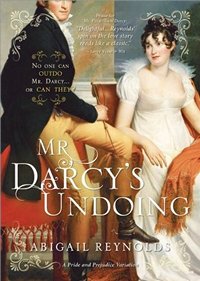
Mr. Darcy's Undoing
By Abigail Reynolds

A passionate new Pride and Prejudice variation explores the unthinkable-Elizabeth accepts the proposal of a childhood friend before she meets Darcy again. When their paths cross, the devastated Mr. Darcy must decide how far he'll go to win the woman he loves. How can a man who prides himself on his honor ask the woman he loves to do something scandalous? And how can Elizabeth accept a loveless marriage when Mr. Darcy holds the key to her heart? As they confront family opposition and the ill-will of scandal-mongers, will Elizabeth prove to be Mr. Darcy's undoing?


Monday, August 8, 2011

The Companion of Lady Holmeshire by Debra Brown: A Book Review

The Companion of Lady Holmeshire

By Debra Brown

ISBN: 1937085376

Publisher: World Castle Publishing

Source: Author Supplied PDF


Back Cover Summary: A baby girl was found in a basket on Squire Carrington's doorstep. She was raised and sent to work as a servant girl for The Countess of Holmeshire. The widowed and unconventional Countess chose Miss Emma Carrington as a companion and sent her off for finishing with the goal of dragging her along into genteel Victorian society. What sort of reception would she have at tea and dinners? The young Earl of Holmeshire was engaged by arrangement to a lovely London lady, but their relationship was difficult. Could they work it out? Even the tribulations and banned romances of the servants downstairs play into the story as we follow Emma from a stone fortress to a Victorian village and then into fabulous London mansions. Great surprises unfold at a Midsummer Night's Dream Ball which helps to solve mysteries that have gradually developed. You are invited to predict the great revelation of the last few pages!


The Victorian Age was a time of immense change. New inventions and questions of social norms were arising and it set the established upper crust on edge. Change is not something welcome as it means a reconfiguring of what was. In Debra Brown’s debut novel The Companion of Lady Holmeshire we see all the turbulence of Victorian change dashed with romance and mystery.

The novel was a refreshing change from my usual fare, as I found myself whisked away into the elite society of Victorian living much in the vein of Jane Austen and yet I was also given to the crass and harsh realities of the less fortunate much in the way of Charles Dickens. For all the sweetness and subtle romance I was forced to envision the realities of the less affluent class. It was blunt and could not be ignored.

The intricate weaving of Victorian history with the plot of the story was fabulous. I found myself enthralled by the story and yet learning at the same time. It is not always an easy thing to do and Miss Brown hit it spot on.

The main character of Emma was strong and mysterious and throughout her parentage is veiled in mystery. Lord Holmeshire is the son of Lady Holmeshire and he is a bit of an eccentric, a lovable hero for the novel who is devoted to the plight of the poor.

There is a cast of many interesting characters. I have to say, as well, that this read a lot like a variation of Upstairs, Downstairs. We are given a view of both the elite and servant classes through the cast of characters. It was fascinating.

Yet, what I enjoyed most was the surprises Brown managed to throw at me. None were what I expected and I appreciate that in an author. It was not till the end that all is revealed and I have a hunch Brown took a cue from Shakespeare’s Puck in a Midsummer Night’s Dream.

Debra Brown’s debut novel was a valiant and intriguing effort. Her writing style is sophisticated and on point and her ability to weave a story is unique and of a style I have not encountered before. I really enjoyed The Companion of Lady Holmeshire and wait for Brown’s next novel with anticipation.


Final Recommendation: If you want the treat of Victorian mystery and suspense, with a spice of romance.


To learn more about author Debra Brown, please visit her website.

Tuesday, August 2, 2011

Henry Tilney's Heroine: A Northanger Abbey Vignette


She was here! Here at Woodston.


Henry struggled to put on his coat bounding down the stairs and out the door. He rounded the corner, and the breath left his body when he caught a glimpse of her beside an oak tree, which softly swayed in the breeze causing some stray strands of her hair to flutter.


The soft glow of the moonlight revealed the luscious hue of her tresses---like melted chocolate. How he longed to run his hands through it.


Her back was to him. If only she would face him so he could look into those beautiful eyes--- eyes deep enough for a man to drown in.


As if he had willed it, she slowly turned to face him. He was struck anew by her enchanting beauty.


“Catherine.”


Her hand reached out and she opened her mouth to speak.


He started---something in the dark was pulling her away from him.


He struggled towards her, stumbling---clawing the dirt beneath him---whilst calling her name. His heart felt like it was being ripped straight from his chest.


The fear on her face tore at him, forcing him on. It was no use.


She was gone!


He yelled. “Catherine.”


****


Henry Tilney jolted awake and sat up. It had all seemed so real. What a terrible nightmare.


Throwing the covers back, he slipped out of bed and down the stairs to the modest study. He poured himself a little brandy and sat in his favorite wing-backed chair near the cold fireplace.


What was it about Catherine Morland that enchanted him so? He closed his eyes and allowed her image to come to him again. As usual, the mere thought of her created a feeling of tenderness in his chest. When he was around Catherine all felt right in the world; it was like coming home.


Departing Northanger Abbey was the hardest, because it meant leaving her. The sky had apparently concurred; for no sooner had he arrived at Woodston than it opened up and poured.


He glanced at the now empty glass in his hand. The feeling of discontent would not leave him.


Thunder rumbled outside. A decision was made.


He returned to his room and dressed. As dawn crested in the horizon, he saddled his horse and made quickly for Northanger Abbey.


****

There was a chill in the air as he dismounted. He relinquished the reins to the stable boy and rushed towards the entrance of Northanger Abbey. If anything, his feeling of dread had strengthened the closer he had come.


His steps echoed on the stone walk, and the sound only agitated him more. The entrance door opened, and the sight of his sister stopped Henry in his tracks. Eleanor had been crying and her fatigue showed. The look on her face told him all he needed to know, but he had to hear the words out loud.


“Catherine?”


Eleanor grimaced. “Gone.”


The air left him. The sky above crackled.


Eleanor wrung her hands. “Father sent her home.”


“What?”


Eleanor told him the whole story then, how Father had returned in a rage, demanding Catherine pack her bags and leave at once.


“Monstrous! What excuse did he give for this outrage?”


“Only that we had an engagement which he had forgotten about. Catherine went without a chaperon in the early dawn.”


Agony swelled inside Henry. His adorable, innocent Catherine. How frightened she must have been.


Eleanor placed a comforting hand on his arm.


“I’m sorry Henry.”


He shook his head in disbelief at his Father’s actions.


“I am obliged to her. She must have been frightened, and I was not there to protect her---Beautiful Catherine. I apologize, Eleanor.”


“You will do no such thing,” intoned General Tilney, his presence looming in the doorway like a dark cloud.


Henry narrowed his eyes. “Do not dare presume to tell me what I will not do! What possessed you, Father, to send her with no chaperon? Why send her away at all?”


“It was the least that could be done for such a scheming and lying chit. In fact it was more than she deserved.”


“Don’t speak of Catherine like that. What did she do that was so horrible?”


General Tilney sniffed as if his time was wasted by such a question. “She is no heiress.”


Henry paused, bewildered. “Of course Catherine is not an heiress. She is a clergyman’s daughter. What would make you assume she had money?”


General Tilney rubbed his fingernails on his coat, giving them a good shine. “An intimate acquaintance of Miss Morland’s, a Mr. Thorpe, divulged the information of her riches to me. However, it seems Miss Morland’s fortune is nothing but a sham. She is no more an heiress than I am a street urchin! Forget her Henry.”


“It is no fault of hers that you believed a fool like Thorpe. Catherine never claimed to be anything but what she is.”


General Tilney’s eyes narrowed in anger. “You will forget her, Henry.”


“No! I will not.” He smiled sadly at his father. “Excuse me I must be departing.”


“Henry, you will cease this foolishness at once. Where do you think you are you going?”


Henry did not turn back. He was too angry to look at his father. “Home. Home to Catherine.”


They carried on the wind, his father’s incensed cries, but Henry cared not. All he cared about was getting to Catherine.


****


The disgruntled sky threatened to open up, constantly grumbling and rumbling. Henry rode as fast as his horse would allow. The rhythmic movement beneath him was somehow soothing, giving him further time for reflection.


He hadn’t understood how smitten he was with Catherine until now. The first time he met her, in the Lower Rooms of Bath, he had been amused by her innocence. She was fresh and completely different from the insipid women he usually came across. Catherine was only herself, and unconcerned with the riches of the world. He was deeply in love with her before he realized it had begun.


Love. It was a funny thing.


As a clergyman he was not supposed to wish ill on anybody. But the self-centeredness and corruption which oozed from John Thorpe was hard to ignore. He was the type of man who liked to weave a spider’s web of lies, hoping that web glistening with morning dew, might beckon some unsuspecting soul into its trap. Having had the misfortune to observe Thorpe around Catherine, Henry could not say that he had felt at ease---no---he had wanted nothing more than to save her from that man’s clutches. But then Catherine had to learn for herself the dangers of contemptible people.


Despite her misfortunes with the Thorpes, she had proven what he had already known: Catherine was a woman of exceptional character. Even in her innocence she exhibited the kind of grace and maturity which one was born with---it could not be learned.


The sky cracked violently overhead, causing Henry to rein his horse in. A steady rainfall began, increasing in speed until it was pouring down and striking his face like hard stones. He realized he would need to rest for the evening, much to his displeasure.


He stopped at the next inn, where he acquired the appropriate lodgings and requested a hot bath be prepared. When that was ready, he slipped his wet clothes off and laid them in front of the fire to dry. Then he sunk into the steaming water, leaning is head back as he did so. His arms rested carefully on the edge. The heat seeped into his body, relaxing him.


He was just drifting off when he heard a scratching at the window. He furrowed his brow. It was dark outside and rain was pounding against the panes. Perhaps it was nothing.


He sighed and let his head loll back. The scraping came again. It was faint, but this time he was sure he had heard it.


He stood---the water cascading down him---slipped on a robe, and approached the window. Upon closer inspection, it became apparent it was only a tree branch manufacturing noise with a little assistance from the wind.


Henry laughed---a rich, deep laugh. How Catherine would have delighted in his Gothic imaginings. He placed his hand on the panes---feeling the cool glass ---and as he stared out at the storm his reflection stared back at him, beckoning him to consider something else entirely.


Catherine would have loved the adventure, but did she love him?


The burning question. Love. It was an exciting adventure, and yet, if love was not returned? He let the thought linger like an aging fine wine---tasting and savoring---as he contemplated.


There was no question as to his affection for Catherine Morland.


Turning from his reflection in discontent, he walked briskly to the bed, slipped under the covers and closed his eyes in an attempt to sleep.


****


“Henry? Why have you not come for me?”


“Catherine,” Henry cried. He heard her voice, but saw only darkness.


“Catherine, why cannot I see you?”


“Henry, I am here. Where are you?”


Standing at the edge of a forest he looked and willed himself to see her, but alas still nothing. He tried to enter the forest, but something prevented him. Turning around quickly, he beheld Catherine’s appearance near the tree line.


Praise, he thought. He was walking towards her, but a shadow crossed between them. She began to struggle as the shadow forced her farther and farther away from him.


He ran, but it was no use. He yelled for her. The darkness had taken her again.


****


Henry awoke in a cold sweat as dawn broke. The desire was strong to see Catherine, if only to assure himself that she was well and, just as importantly, that she returned his affection. He dressed in his now-dry clothes from the night before. In the haste to leave Northanger Abbey after realizing the extent of his father’s poor hospitality there had not been the opportunity to properly prepare for this trip.


He partook of a breakfast of kidney pie and coffee before acquiring his horse from the stables and setting off. The morning was cool and calm after the storm from the night before. The roads were wet, and he was finding his breeches painted with mud. He cared not a wit, for each step brought him closer to Catherine.


Dusk was beginning to crest and his anticipation came to a climax when he finally arrived in the tiny village of Fullerton. After inquiring from one of the passing town folk as to the location of the Morland’s, he set in the direction on foot, choosing instead to stretch is tired muscles and to hopefully quell some of the nervous energy in him.


From behind an oak in the bend of the road, the residence of the Morland’s came into view, showing it to its best advantage. While it was a small home it radiated the affection of the family within, reminding Henry of what he hoped for with Catherine at Woodston.


In his moment of reflection he had failed to notice what was around the bend.


Henry froze. His breath stuck in his throat as he saw her. She had made the trip from Northanger Abbey ---alone---and arrived safely home.


His hands suddenly felt clammy, and sweat formed on his brow. He, Henry Tilney, was nervous. But then perhaps he should be since he was about to make a fool of himself over a woman who might not even return his affection.


He turned around and paced back and forth, muttering to himself and trying to work up the courage to approach her. If it had been any other time, he would have been amused, but he had never wanted something so much in his life. It was ironic when he thought about it. He had his parish and his parishioners and his sister Eleanor, but it all seemed not quite right without Catherine.


The soft lilt of laughter had him peering around the oak again. Catherine was snickering at something one of her siblings had said. Yet, her amusement did not quite reach her eyes. As he looked closer, dark circles were evident denoting lack of sleep. Guilt at his Father and the urge to comfort her ripped through him as he unconsciously moved forward.


Suddenly her head lifted towards him and their eyes locked.


He took a cautious step toward her, which seemed to shake Catherine from her shock. She quietly told her siblings to go indoors, never taking her eyes from his. Then she straightened and folded her hands demurely in front of her. Her face was devoid of emotion. That concerned him, as he was used to always knowing what she thought.


Henry scowled. He did not like this at all, but he also had not come all this way to tuck tail and run.


He felt a shift in the temperature, which only seemed to rise as he came closer. Yet Catherine remained as she was, fixated on his face. Henry stopped just inches from her, and it took every ounce of his willpower not to take her into his arms.


He opened his mouth, but he ended up looking more like a fish as he found it difficult to articulate his thoughts out loud.


“Good day, Mr. Tilney. I am well thank you for inquiring.”


Henry looked at her, startled. Then he noticed the glint in her eye. She was teasing him. The corners of his mouth curled in amusement.


“Good day, Cath-er-ine.” He purposely drew out her name and, as he did so, he saw something spark in her luminous gaze. It almost looked like hope. Could she have been waiting for him?


Testing his luck, he took one of her small hands into his larger one. There was no resistance. He regarded their joined hands with an air of anticipation of things to come. Lifting his head and fixating his gaze on Catherine’s face, his nervousness slipping away.


“Catherine. You must allow me to apologize for my father’s actions.”


She shook her head. “No. It is not you who must apologize. I was in error…I who…”


He silenced her with a finger on her lips.


Henry had a wicked thought as he removed his finger from her pert mouth and carefully, purposely, dragged it along her cheek. It was her blush and the hitch in her breath that gave her away.


“Catherine, I am going to kiss you.” He said it slowly, giving her time to deny his request. The anticipation was going to be the death of him. Now that he was here, he was finding it hard to restrain himself.


He leaned in about to kiss her when she abruptly withdrew from his embrace. He growled in frustration.


“What are you doing here?” she asked. “Surely it cannot be just to apologize for your father?”


He glanced at their still joined hands.


“Catherine, you must know.”


She shook her head.


“I came for you.” There! He had said it!


Before he knew what was happening, she launched herself into his arms and kissed him.


He smiled against her mouth. She loved him. The temperature had risen to burning levels as she pressed herself further into his embrace. She was eager and, dare he say, almost wild in her passion. It took what little will power he had left to tear himself apart from her. He laughed at her squeal of protest, but he had to ask her one thing.


“Catherine will you do me the greatest honor by becoming my wife?”


“Oh, Henry!”


As she breathed his name, he felt a surge of triumph and no small amount of happiness. Her lips met his again and he took her passionate response as an affirmative to his proposal.


She was his Catherine. He was home.

Finis

****Photo used for story cover at the top of the page is of Eilean Donan Castle which is located in the rugged, wild and romantic Scottish Highlands.


 A special thanks to Meredith Esparza of Austenesque Reviews for inviting me to participate.


****GIVEAWAY TIME****
 
Northanger Abbey is one of my favorite Austen novels. As a special treat to my visitors during Austenesque Extravaganza and to my long time followers, and because I just love this book,
I will be giving away ONE copy of Emily C.A. Snyder's Nachtsturm Castle.
 
First: You MUST fill out this form to let me know you are interested in being entered in the giveaway 
 
Second: Leaving a comment grants you ONE entry
Tweeting grants you a SECOND entry
 
This giveaway is international.

ENDS August 20th.


ALSO, There is another giveaway on my blog to win a copy of Jane Austen's Sense and Sensibility. This giveaway ends August 31st.

Thursday, June 30, 2011

The Watsons by Jane Austen and completed by John Coates: A Review


The Watsons

by Jane Austen

Completed by John Coates

Source: local library


The Watsons was an unfinished manuscript left behind by Jane Austen. It has always caused us to wonder what would have happened had she finished it, so it was with delight that I found a very hard to find completion by John Coates. When I say hard to find I mean it’s out of print. I was lucky my library had a copy hiding in its midst’s.


Coates makes a change to our heroine’s name. Instead of calling her Emma he calls her Emily, which works just fine.

In the initial fragment we are led to understand that Emily had been raised by her Aunt who upon her second marriage went to Ireland effectively sending Emily back home to strangers. Mr. Watson is a sickly man who rarely leaves his room and Mrs. Watson is long since dead which is suggested to be the cause of Mr. Watson’s condition.

Emily comes from a large family---two brothers and four sisters. Her brother Robert is married to a simpering woman named Jane. The other brother Sam is practicing to be a doctor. Elizabeth, the eldest daughter, is in essence the lady of the house seeing to all the needs of the parsonage. Penelope is the teasing, witty one and Margaret is vain and self absorbed. What a cast of characters!

Tom Musgrave is considered a flirt a la Willoughby or Wickham. He gets his just desserts when he marries Margaret Watson as he is sure to be miserable in life now. Lord Osborne is the wealthy lord who sets his eye on Emily and proposes to her twice (both time refused), but in a charming twist he finds his heart has been claimed elsewhere for some time. It is Mr. Howard who ultimately wins Emily’s heart despite him only being a clergyman---what is wealth and status to true love?

In other words this is a cast of characters that only Austen could have introduced.

Coates created a balance between Emily and her Aunt and their more prosperous status than that of her family. However it was suggested that Jane spoke to her sister Cassandra and explained that Emily’s father Mr. Watson was to die and she was to be dependent on her snipping sister-in-law and brother. As I knew of this I was saddened to see Coates deviate from that path, but then that is what makes it a completion because we can only speculate how Jane herself would have ended it.

Coates does an admirable job in keeping the transition between Austen’s fragment and his completion without any disasters. What is more is that every Janeite is sure to find similarities to other Austen characters in this book. I thoroughly enjoyed this book and believe that even Jane herself would have been proud.

Final Recommendation: A book worth the read….if you can find a copy that is.

Have you read this completion or the one by Joan Aiken?

Sunday, June 26, 2011

The Watsons: An Unfinished Fragment by Jane Austen

The Watsons is one of Jane Austen’s unfinished manuscripts (only about 17 ½ thousand words) and the only one from her time in Bath. It is well known that Austen truly hated Bath and it was an unhappy time in her life. It is thought that Austen began writing The Watsons sometime in 1804 and then abandoned the manuscript after her father’s death in 1805.


The Watsons begins with the heroine Emma Watson returning home for the first time. In infancy she was given to a more affluent and childless Aunt to raise as was particularly customary during the time if a family had too many mouths to feed. Emma’s Aunt has remarried and so Emma has been sent home. Where once she may have expected to be given a dowry she now has nothing and is cast into obscurity. Emma has been raised in more refinement than her poor siblings and now she must navigate a way of life where she is poorer than she is used too and social norms are different. In addition, while this is her family they are also complete strangers. It is a difficult situation to be sure for Emma.

Mr. Watson, Emma’s father, is shown as a sickly man who perhaps never quite recovered from the death of his wife years prior. Emma is one of six children. Elizabeth is the oldest and has taken to running the small parish household. There is also Penelope and Margaret. There are two brothers, Sam and Robert. Robert is married to Jane who we can tell, even from her brief appearance in the fragment, that she is insipid and close minded.

We are introduced to two possible suitors for Emma. There is the rich, titled landowner, Lord Osborne, who first lays eyes on her at a ball and is intrigued. Then there is Mr. Howard who is the former tutor to Lord Osborne and now the clergyman in the parish of Osborne Castle. Mr. Howard also meets Emma at the same ball that she is introduce to Lord Osborne. What is a girl to do with two different choices?

Well we do not know as the fragment ends quite abruptly.

It is suggested, and rightly so if you know Austen that Emma will turn down a marriage proposal from Lord Osborne and in the end marry Mr. Howard.

In the memoir by Austen-Leigh the following is stated:

When the author’s sister, Cassandra, showed the manuscript of this work to her nieces, she also told them something of the intended story; for with this dear sister---though, I believe with no one else---Jane seems to have talked freely of any work she might have on hand. Mr. Watson was soon to die; and Emma to become dependent on her narrow-minded sister-in-law and brother. She was to decline an offer of marriage from Lord Osborne, and much of the interest in the tale was to arise from Lady Osborne’s love for Mr. Howard, and his counter affection for Emma, whom he was finally to marry (Austen, p.152, Penguin Classics edition.).


It is only a wonder what Austen would have done had she continued the story. The stage has been set for a classic story, peppered with Austen’s wit and social satire. In fact Austen was almost exhibiting a bygone era which would have only made the story all that more delightful.

We can enjoy her fragment for what it is knowing that had she finished it there would have been another delightful Austen heroine to add to the mix. There could have been an Emma 1 and Emma 2 or perhaps we would have differentiated by calling them Woodhouse and Watson.

It has been suggested that The Watsons is an early manuscript for Emma, but given the foundation set for the story I cannot agree and can only say I believe that it was to be entirely different from Emma and would have been a charming addition to the Austen works which we enjoy today.

I just finished the John Coates completion of The Watsons and will be posting my review here soon. There is also a completion by Joan Aiken recently rereleased by Sourcebooks as The Watsons & Emma Watson. In the meantime if you have not already you should pick up a copy of Jane Austen’s unfinished manuscript of The Watsons or if you have money to burn you can buy the original manuscript which has recently come up for action.